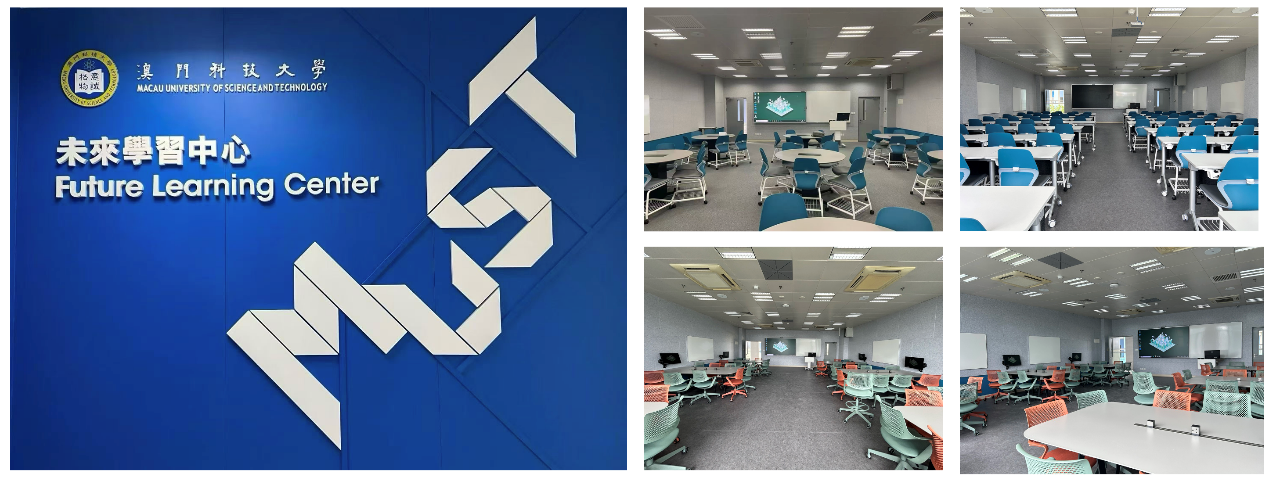


To help faculty fully utilize smart teaching facilities and drive innovation in classroom teaching models, the Information Technology Development Office (ITDO), Academic Affairs Office (ACAO), and School of Graduate Studies (SGS) of Macau University of Science and Technology successfully organized two themed workshops titled “Smart Classroom Introduction and Experience” on December 2 and 4, 2025. The workshops were conducted in Chinese and English respectively, attracting enthusiastic participation from teachers across various faculties. The training aimed to provide in-depth understanding of the functions of the smart classrooms at the “Future Learning Center” on the 6th floor of Building O through equipment demonstrations and hands-on practice, thereby effectively supporting faculty in implementing TBL (Team-Based Learning) interactive teaching and enhancing classroom engagement and teaching effectiveness.
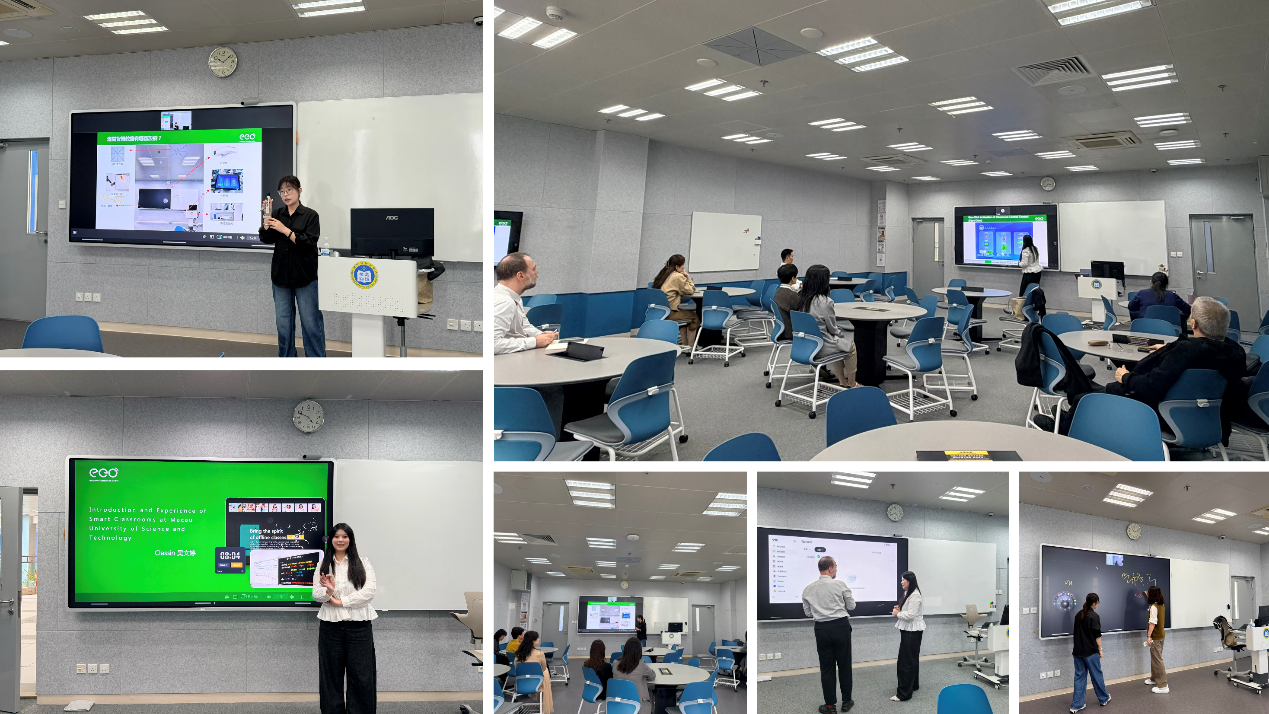
The training focused on hardware operation and software application of smart classrooms, covering three core areas: equipment operation, teaching application, and practical exercises. Instructors introduced the key facilities of the smart classroom, including the one-touch control central system, interactive writable large-screen display, array microphones for full-range audio capture, and AI cameras. They also demonstrated three teaching modes ranging from basic to advanced to meet different technical starting points and teaching needs. By integrating real academic case studies, instructors vividly showcased how smart tools can be flexibly applied to diverse teaching scenarios such as language, mathematics, and science, deepening teachers’ understanding of the potential of smart classroom applications.
During the hands-on and Q&A sessions, participants practiced the convenient “1-2-3-4-5” blackboard operation technique, rehearsed the full process of the three teaching modes, and learned quick troubleshooting methods for common equipment issues. The interactive segment effectively addressed on-site questions, boosting teachers’ confidence in applying technology in real classrooms.
Participants commented that the training not only clearly demonstrated the convenience of smart devices but also provided a tangible sense of how technology can truly enhance teaching interaction and student engagement. Features such as real-time saving and sharing of blackboard notes, instant projection of student work, and remote hybrid teaching opened up broad possibilities for exploring new teaching models.
This training is an integral part of MUST’s “Smart Teaching Ecosystem” series for Semester 2602. As a key infrastructure for teaching innovation, the “Future Learning Center” was officially launched in September 2025, with the first phase opening 10 smart classrooms dedicated to creating highly interactive, flexible, and immersive learning spaces. Looking ahead, MUST will continue to advance teaching model improvements and innovations in the AI era by deeply integrating smart teaching environments and tools, empowering faculty to deliver personalized, data-driven teaching practices, and cultivating future talents with collaboration and innovation capabilities—jointly building a forward-looking, interactive, and inclusive learning ecosystem.