

To actively respond to the emerging challenges of talent cultivation in the era of artificial intelligence and digitalization, and to further enhance frontline faculty members' capabilities in smart instructional design and platform application, the Information Technology Development Office (ITDO) at Macau University of Science and Technology meticulously organized a series of faculty workshops on smart teaching from May to June 2026. The training featured Professor Hong Huaqing as the keynote speaker. He is a Visiting Professor at M.U.S.T., a researcher at the Centre for Research and Development in Learning at Nanyang Technological University, Singapore, a researcher at the Institute of Linguistic Science and Technology at Shanghai International Studies University, and an International Expert at the Center for Teaching and Learning Development, Peking University. Drawing on his extensive experience in educational reform, Professor Hong shared deep insights on the seamless integration of Generative AI (GenAI) into smart teaching platforms, comprehensively supporting various colleges and faculties in driving "classroom paradigm shifts" and implementing data-driven, precise teaching practices.
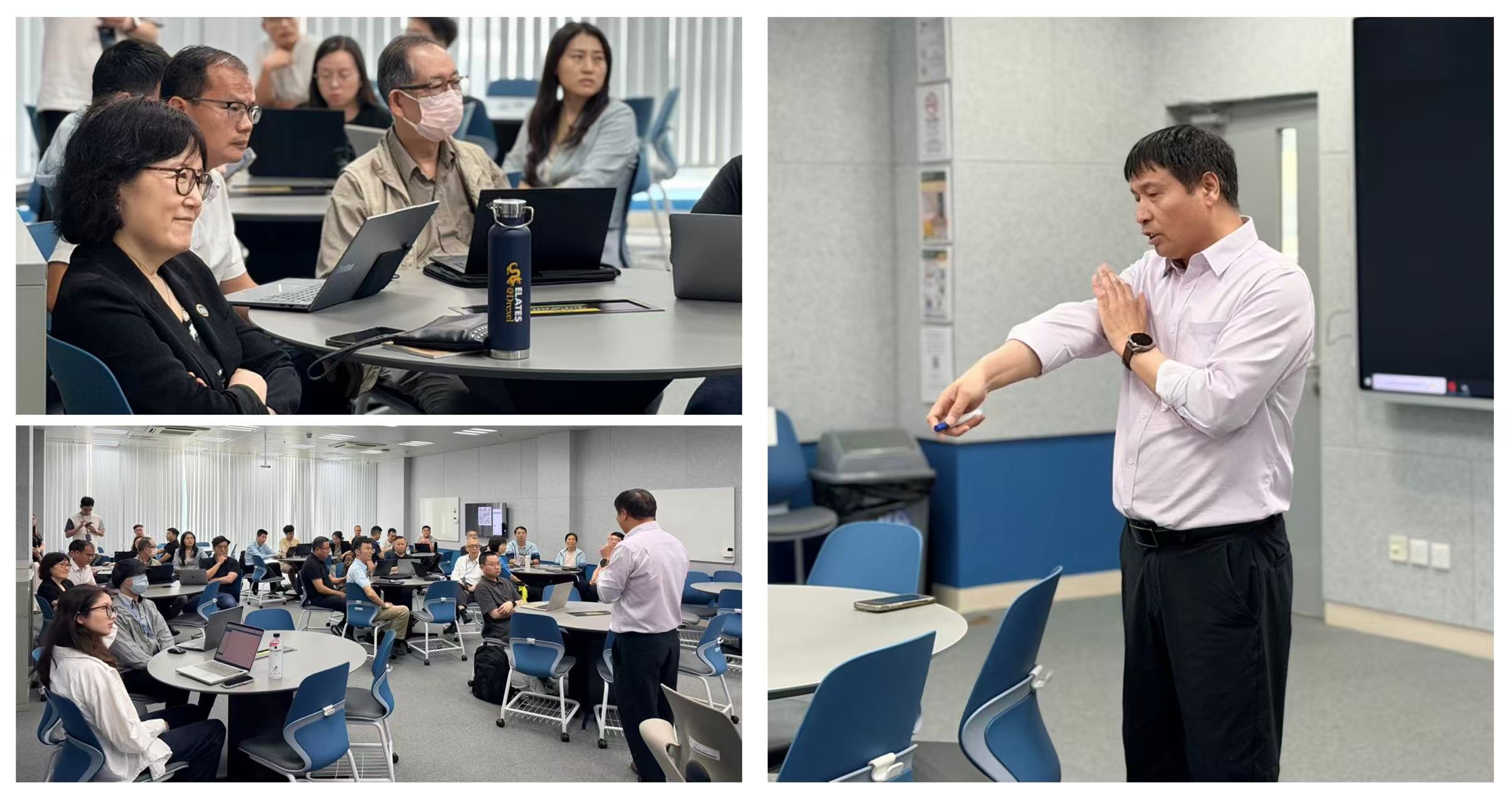
Faculty of Innovation Engineering: GenAI-Empowered TBL and Building a Traceable Chain of Evaluation Evidence
The two dedicated workshops for the Faculty of Innovation Engineering (FIE) attracted a total of 83 faculty members. Professor Sun Qiao, Dean of FIE, also attended the event to engage in the discussions. The sessions systematically introduced the core workflow of Team-Based Learning (TBL), which spans pre-class preparation, Individual Readiness Assurance Tests (iRAT), team discussions, Team Readiness Assurance Tests (tRAT), and in-class application tasks. By stepping into the shoes of students, participating teachers immersed themselves in the workflow. They experienced firsthand how instructors can leverage real-time feedback data generated by the platform to instantly pinpoint students' learning gaps. This allows educators to pivot classroom time away from low-efficiency lecturing and focus instead on clarifying key concepts and facilitating high-level applications. Furthermore, Professor Hong advocated for the formation of collaborative teaching teams ("Team with Teaching") to foster the digital preservation of instructional expertise within engineering disciplines.
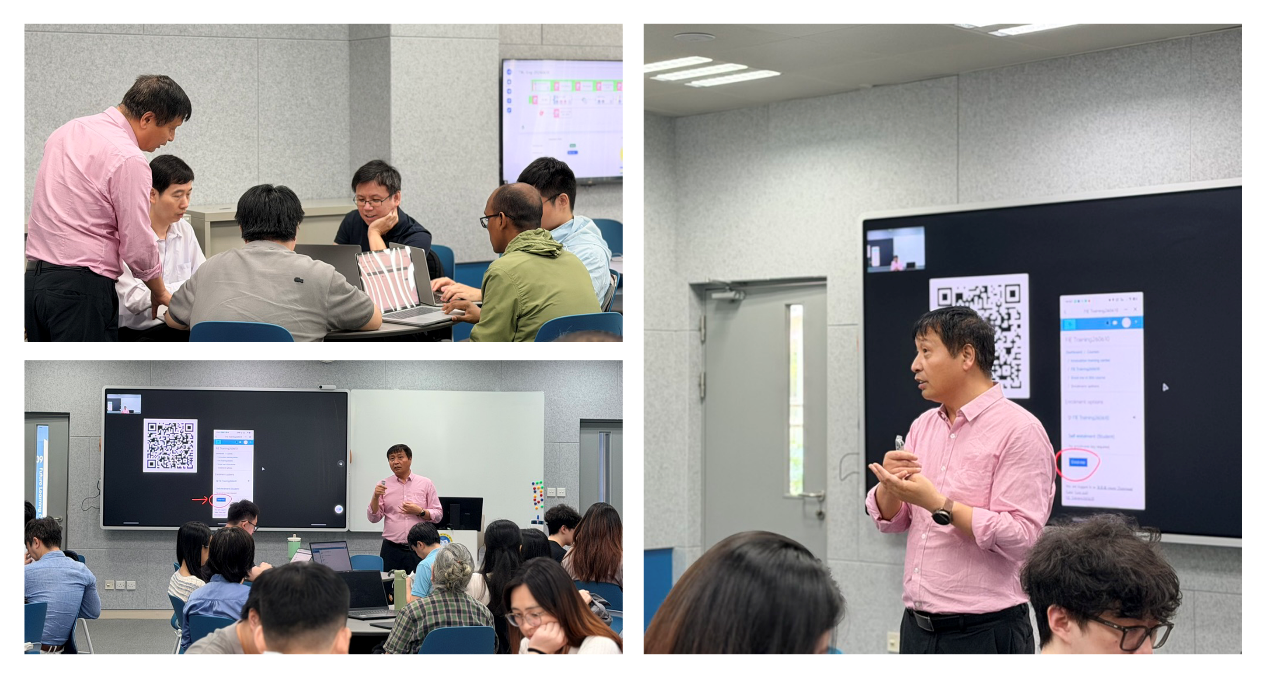
School of Business: A Dual Drive of Conceptual Immersion and Practical Execution for Hands-On Learning Sequence Construction
The two workshops designed for the School of Business adopted a progressive, step-by-step model, focusing entirely on the "classroom paradigm shift" in business education. The first session prioritized "conceptual immersion," guiding instructors to restructure classroom dynamics and experience the power of data-driven "active learning". The second session shifted the focus entirely to "practical execution". Professor Hong adopted a hands-on mentorship approach, guiding business faculty step-by-step to personally construct their own learning activity sequences on the smart teaching platform. Tailored closely to the instructional needs of business disciplines, the practical exercises covered creating multimedia online reading materials, utilizing AI features to rapidly build question banks, flexibly setting up student self-assessment milestones, and managing the workflow for diverse grouping, team leader selection, and online group discussions. This hands-on practice tangibly boosted teachers' confidence in digital instruction.
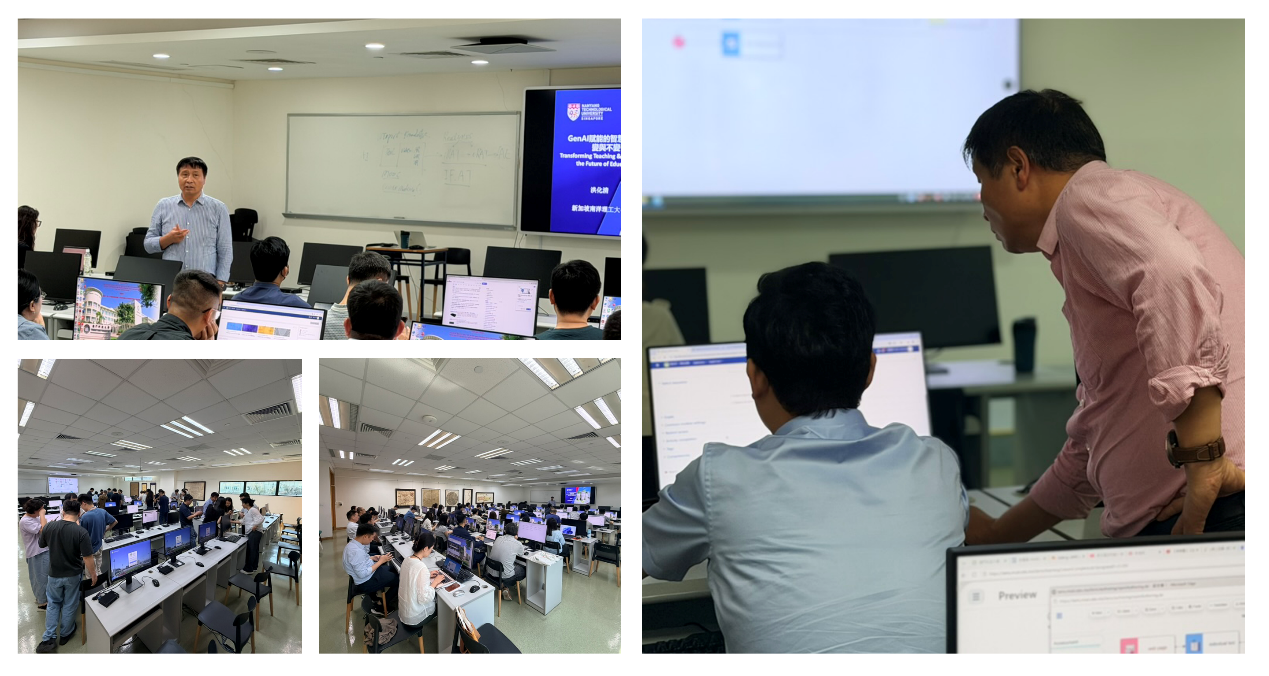
Faculty of Hospitality and Tourism Management: Integrating Theory and Practice to Optimize Interactive Classrooms
The workshop tailored for the Faculty of Hospitality and Tourism Management was designed around the discipline's defining characteristics, which place equal emphasis on theory and practice alongside immersive scenario experiences. Participating faculty experienced the entire TBL instructional loop from a student's perspective. Aligned with the specific needs of hospitality and tourism education—which highly values practical operations, case studies, and high-frequency instructor-student interaction—the training specifically demonstrated how to utilize the technical support of smart platforms to optimize large-class collaboration and peer-to-peer engagement. This comprehensively empowers instructors to optimize interactive classroom design and deliver data-informed, precise teaching.
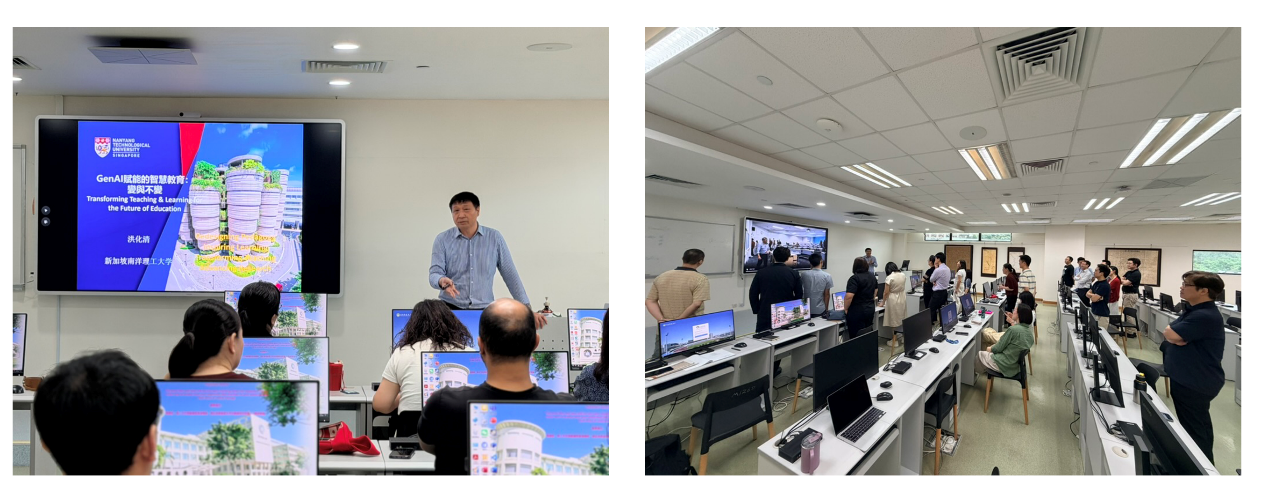
Fostering Interdisciplinary Synergy: Enriching Pedagogical Methods and Comprehensively Advancing Digital Course Construction
This series of faculty-specific workshops represents a vital initiative by the University to embrace instructional innovation in the AI era. By blending technology with cutting-edge pedagogical concepts, the training has effectively supported educators from diverse professional backgrounds in diversifying their teaching methodologies. Powered by the robust capabilities of the smart teaching platform, these efforts not only empower teachers to conduct data-driven precise teaching and significantly optimize the quality of interaction and depth of inquiry across disciplines, but also provide a strong impetus for the accumulation of digital course resources and the modernization of curriculum frameworks across all faculties.

