

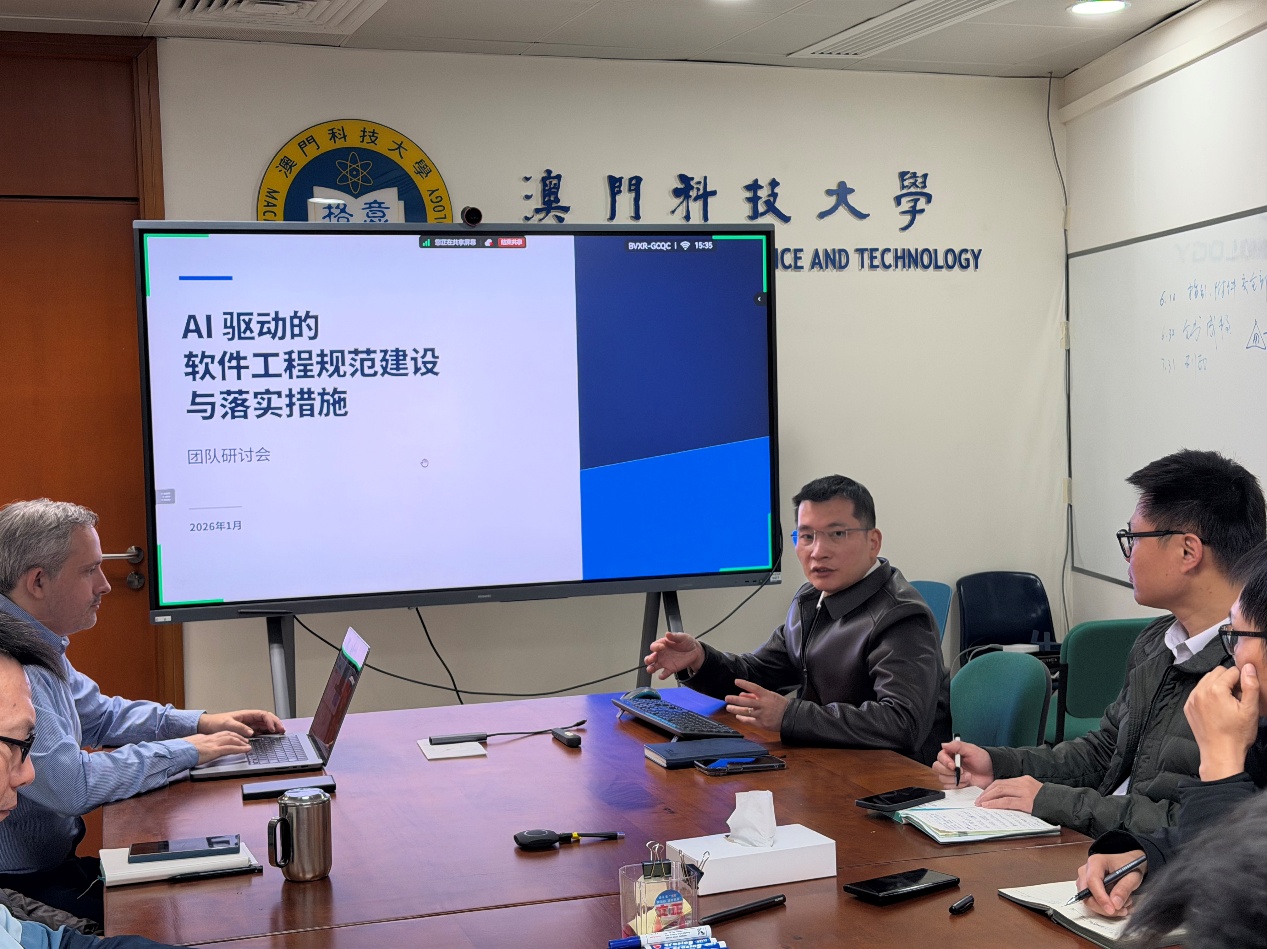
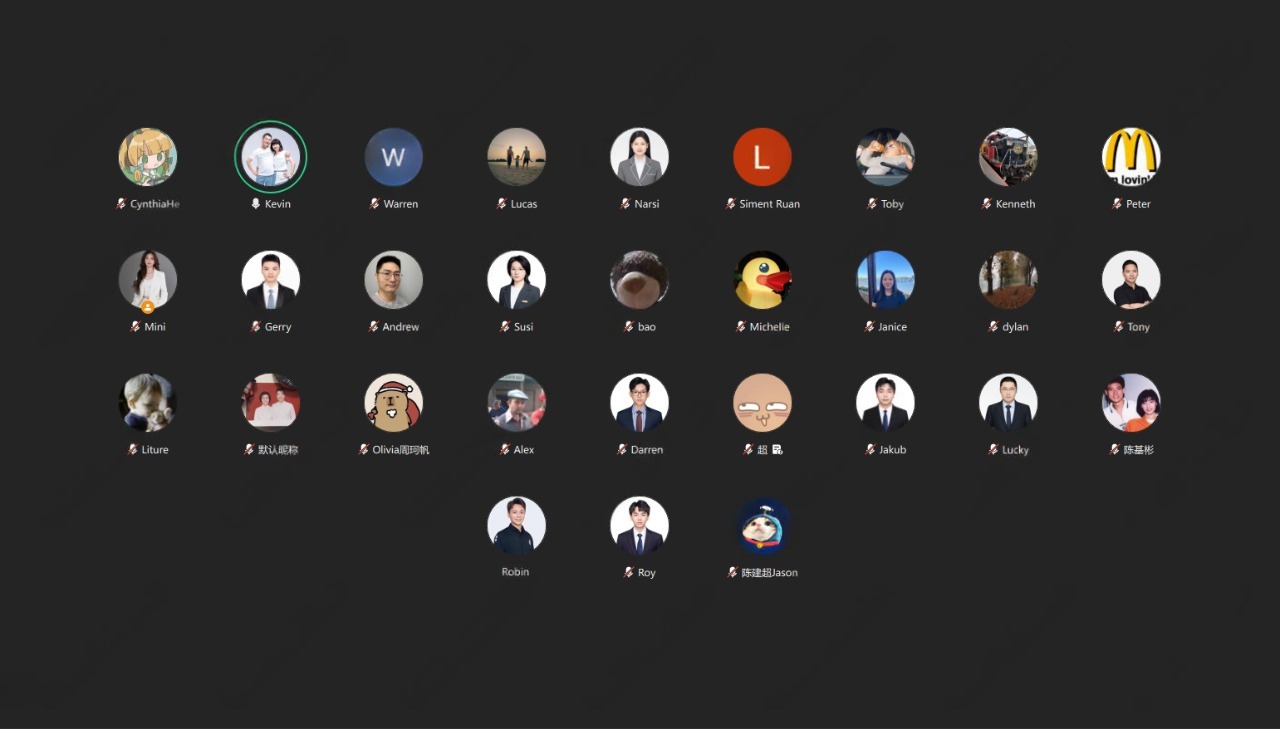
The Information Technology Development Office (ITDO) held a thematic symposium on "AI-Driven Software Engineering Standards & Implementation" on January 23, 2026. The meeting was chaired and led by Office Manager Yuan Husheng in a hybrid format, with teams from Macau, Shenzhen, and Hengqin participating. The symposium aimed to systematically address the opportunities and challenges of deep AI integration in software engineering. It focused on establishing practical, auditable, and sustainable standards for AI-assisted development and formulating a concrete implementation roadmap.
The meeting analyzed the current state and key challenges of AI-assisted development. Participants recognized AI's significant role in boosting efficiency across requirements analysis, code generation, and testing. However, they noted that a lack of unified standards leads to inconsistent output, untraceable processes, difficulty in knowledge retention, and unclear accountability. Alex, Lead of the DevOps Team, emphasized based on practical experience that AI-generated code carries inherent "non-deterministic" risks and often lacks understanding of overall project architecture and business context. Integrating it without strict review introduces potential quality, security, and maintenance issues. The root cause is that AI application remains at an individual tool level, not yet integrated into a systematic engineering framework.
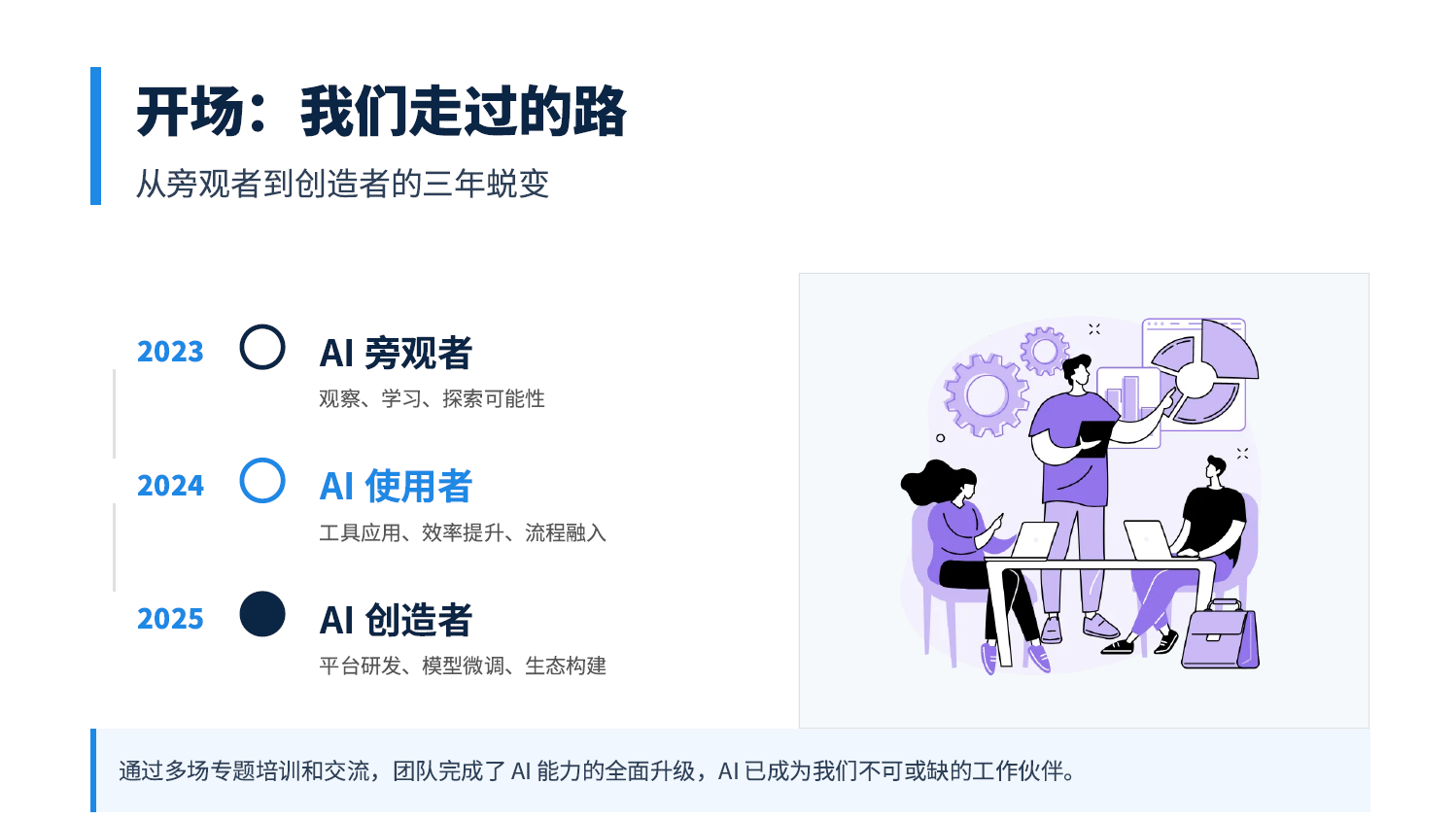
Therefore, the symposium established the core principle for AI-driven software engineering standards: "Human-Centric, Human-Machine Collaboration." It clarified that human developers are the ultimate responsible entity and decision-makers, with AI as a powerful auxiliary tool. Under this principle, the primary goal is achieving process "transparency" and "auditability." The meeting proposed treating key AI interaction artifacts—including prompts, dialogue context, generated outputs, and revision history—as vital software engineering assets, subject to mandatory, structured version control and archiving. This is fundamental for issue tracing and for converting individual experience into team knowledge.
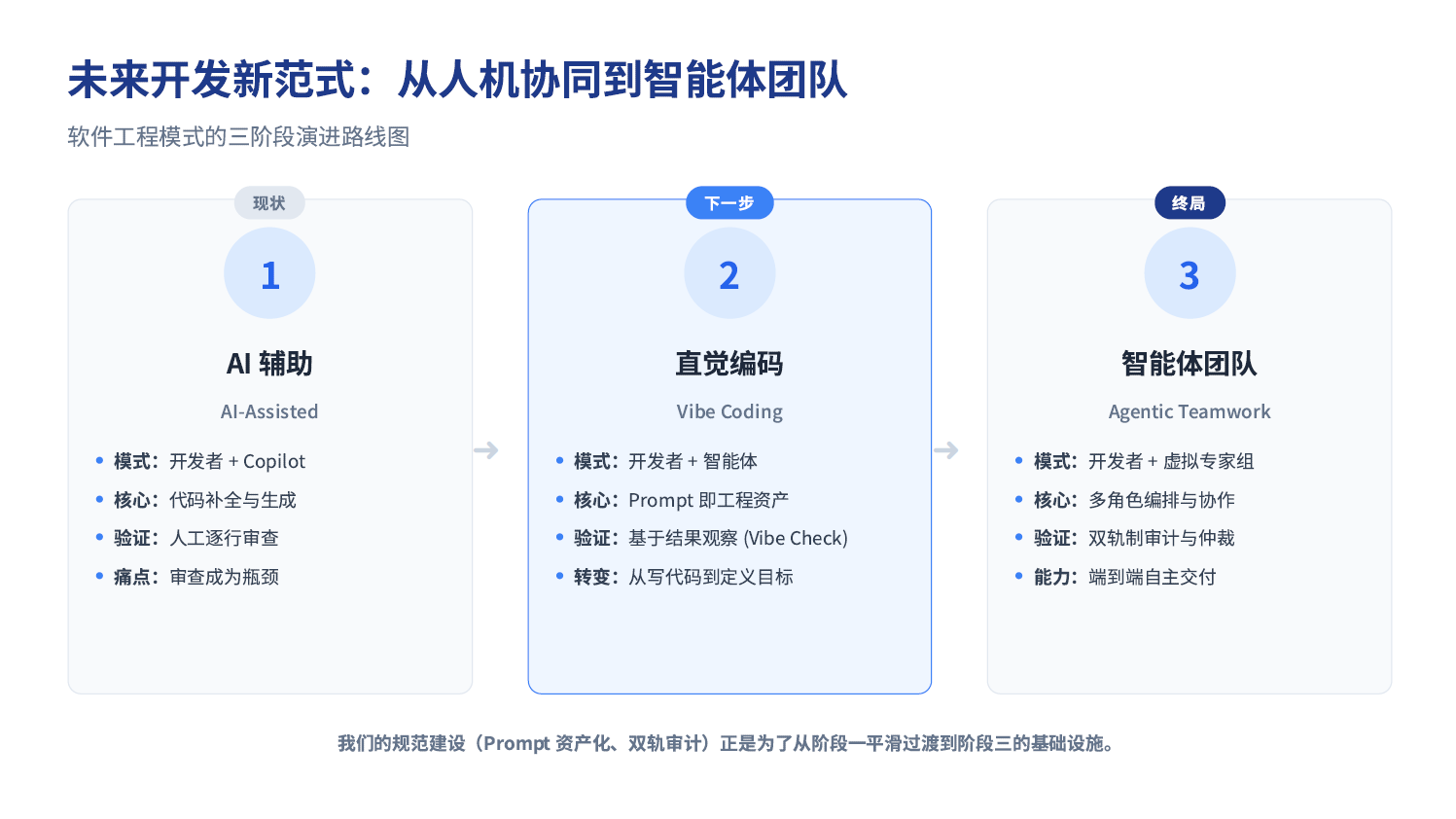
Based on this consensus, the meeting outlined specific implementation measures. At the organizational and process level, a "Pilot First, Iterative Rollout" strategy was adopted. Each team will select 1-2 suitable pilot projects to implement new processes, including standardized prompt templates, annotation norms for AI-generated artifacts, and mandatory human review checkpoints. Andrew, Head of the Shenzhen Team, suggested a pragmatic resource allocation model, dedicating specific resources to standard development while ensuring core business stability.
At the technical and tooling level, the discussion focused on supporting the standards. Topics included integrating prompt libraries with version control systems (e.g., Git), establishing automated logging and archiving for AI use, and designing standardized code review checklists for AI-specific risks. Alex noted that tool selection should prioritize auditability and collaboration, avoiding new information silos.
The meeting concluded with a clear action consensus. All agreed that AI-driven software engineering transformation is a systemic effort requiring coordinated evolution of technology, process, and culture. Short-term, teams will focus on pilot projects to gain practical experience. The mid-term goal is to develop a preliminary, locally-adapted set of standards and tooling guidelines within six months. Long-term, the aim is to cultivate an engineering culture that embraces technological benefits while maintaining rigor, collaboration, and innovation. This symposium laid a solid foundation for subsequent work, marking a key step in the team's journey toward AI-era software engineering management.

